While it is more flexible than the fixed week system, the "floating week" might not be available during the busiest times of the year and might need to be scheduled well ahead of time to guarantee accessibility. The points system uses indicate represent timeshare ownership, based on aspects such as resort place, size of the vacation property, and time of availability.
While the points system provides users with increased trip options, there is a broad variation between the points designated to different vacation resorts due to the previously mentioned aspects included. Timeshares are usually structured as shared deeded ownership or shared leased ownership interest. Shared deeded ownershipgives each buyer a percentage share of the physical home, corresponding to the time period acquired.
Simply put, buying one week would provide a one-fifty-second (1/52) ownership interest in the unit while two weeks would provide a one-twenty-sixth (1/26) interest and so on. Shared deeded ownership interest is typically kept in eternity and can be resold to another party or willed to one's estate. Shared rented ownership interest entitles the buyer to utilize a specific home for a fixed or floating week (or weeks) each year for a specific number of years.
Property transfers or resales are also more restrictive than with a deeded timeshare. As a result, a leased ownership interest might have a lower worth than a deeded timeshare. Based on the above, it is evident that holding a timeshare interest does not always imply "fractional ownership" of the underlying residential or commercial property.

The principle of fractional ownership has likewise been reached other properties, such as personal jets and recreational lorries. According to ARDA, 2019 was the 9th straight year of development for the U.S (how much does timeshare exit team charge). timeshare industry, with $10. 2 billion in sales and $2. 4 billion in profits from its 1,580 resorts.
The smart Trick of How To Buy A Timeshare Cheap That Nobody is Talking About
However, in any debate of the benefits of timeshares vs. Airbnb, the truth is that both have particular qualities that attract 2 divergent and enormous demographic friends. The main appeal of Airbnb and other home-sharing websites remains in their flexibility and capability to offer distinct experiencesattributes that are treasured by the Millennials.
In addition, due to the fact that many Airbnb leasings are domestic in nature, the facilities and services found in timeshares might be unavailable. Timeshares typically provide predictability, convenience and a host of amenities and activitiesall at a cost, naturally, but these are characteristics typically valued by Infant Boomers. As Baby Boomers with deep pockets start retirement, they're most likely to buy timeshares, signing up with the millions who already own them, as a hassle-free alternative to spend part of their golden years.
Nevertheless, there are some unique downsides that investors must think about before getting in into a timeshare agreement. Most timeshares are owned by large corporations in desirable holiday places. Timeshare owners have the assurance of knowing that they can vacation in a familiar location every year with no unpleasant surprises.
In comparison to a typical hotel space, a timeshare home is likely to be considerably larger and have many more functions, helping with a more comfy stay. Timeshares might therefore appropriate for people who prefer vacationing in a foreseeable setting every year, without the inconvenience of venturing into the unknown in terms of their next holiday.
For a deeded timeshare, the owner likewise has to the proportional share of the monthly home loan. As an outcome, the all-in expenses of owning a timeshare may be quite high as compared to staying for a week in a similar resort or hotel in the same place without owning a timeshare.
Some Ideas on How To Sell A Timeshare You Should Know
In addition, a timeshare contract is a binding one; the owner can not walk away from a timeshare contract because there is a modification in his/her financial or personal circumstances. It is infamously challenging to resell a timeshareassuming the contract enables resale in the very first placeand this lack of liquidity may be a deterrent to a potential financier.
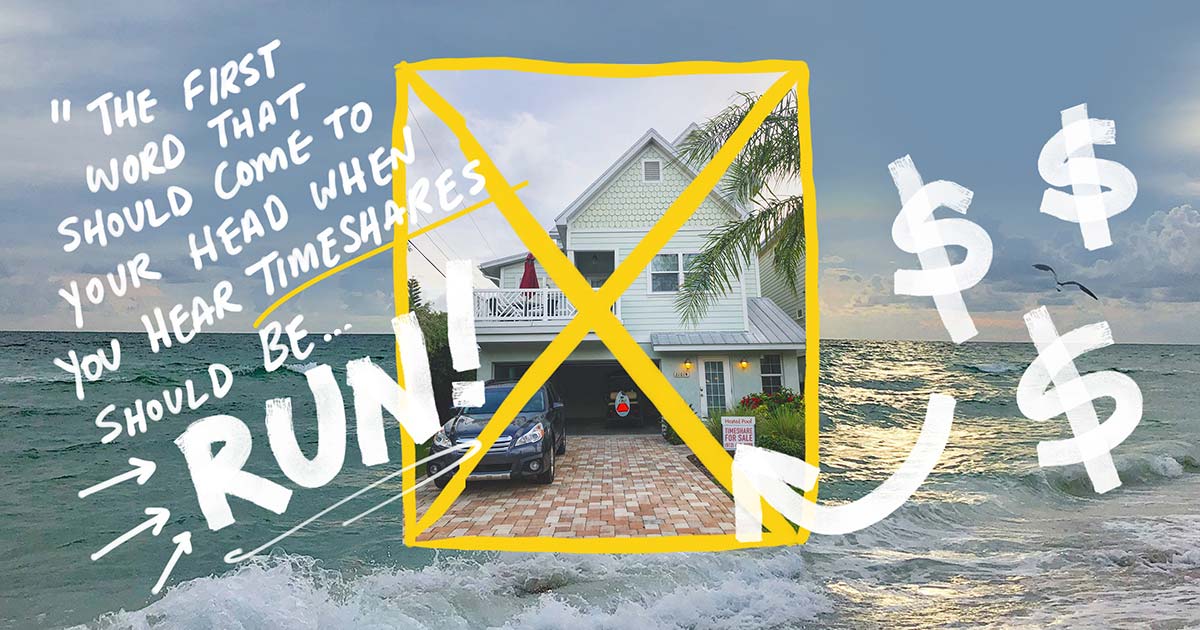
Timeshares tend to diminish quickly, and there is an inequality in supply and demand due to the number of timeshare owners wanting to exit their agreements. Pros Familiar place every year without any unpleasant surprises Resort-like facilities and services Avoids the hassle of booking a new holiday each year Cons Ongoing costs can be significant Little versatility when altering weeks or the agreement Timeshares are difficult to resell Aggressive marketing practices The timeshare industry is infamous for its aggressive marketing practices.
For instance, Las Vegas is filled with timeshare marketers who attract clients to listen to an off-site timeshare presentation. In exchange for listening to their pitch, they offer incentives, such as free event tickets and complimentary hotel lodgings. The salespeople work for home designers and regularly use high-pressure sales methods created to turn "nays" into "yeas." The costs designers charge are significantly more than what a buyer could understand in the secondary market, with the developer surplus paying commissions and marketing costs.
Since the timeshare market is swarming with gray areas and questionable organization practices, it is vital that prospective timeshare purchasers conduct due diligence prior to purchasing. The Federal Trade Commission (FTC) detailed some basic due diligence actions in its "Timeshares and Trip Strategies" report that should be browsed by any prospective buyer.
For those looking for a timeshare property as a getaway choice instead of as an investment, it is quite most likely that the very best deals might be discovered in the secondary resale market rather than in the main market produced by vacation residential or commercial property or resort developers.
Not known Details About How To Own A Timeshare
You've most likely heard about https://zenwriting.net/tifardfljb/it-is-also-called-vacation-ownership-vacation-ownership-and-club-time-it-is timeshare properties. In fact, you have actually most likely heard something negative about them. But is owning a timeshare actually something to prevent? That's hard to state till you know what one really is. This short article will evaluate the basic concept of owning a timeshare, how your ownership may be structured, and the advantages and drawbacks of owning one.
Each purchaser typically purchases a certain period of time in a particular unit. Timeshares generally divide the property into one- to two-week periods. If a purchaser desires a longer period, acquiring numerous successive timeshares may be a choice (if readily available). Standard timeshare residential or commercial properties normally sell a set week (or weeks) in a home.
Some timeshares provide "versatile" or "drifting" weeks. This arrangement is less stiff, and Get more information permits a purchaser to pick a week or weeks without a set date, but within a specific period (or season). The owner is then entitled to schedule his/her week each year at any time during that time duration (topic to accessibility).
Since the high season may stretch from December through March, this gives the owner a bit of holiday versatility. What kind of home interest you'll own if you buy resort cancellation services a timeshare depends upon the type of timeshare purchased. Timeshares are usually structured either as shared deeded ownership or shared leased ownership.
The owner receives a deed for his/her percentage of the unit, defining when the owner can utilize the residential or commercial property. This implies that with deeded ownership, lots of deeds are released for each residential or commercial property. For example, a condominium unit offered in one-week timeshare increments will have 52 total deeds when totally sold, one issued to each partial owner.